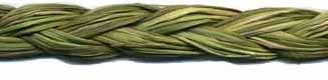
Also called Vanilla grass, Bison grass, and zubrowka.
Our Supershamanistic™ strain is continuing to be grown by my cousin Brenda Sharp from her OZARK NATIVE ECOTYPES Indigenous Plant Nursery in Arkansas--Website is www.nativeecoptypes.com amd there is a shopping cart at to make your order.
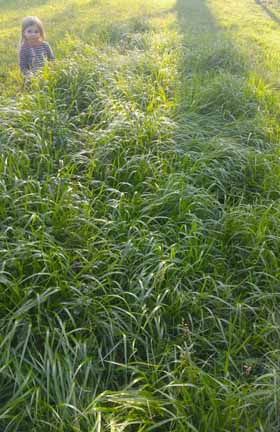
Photo shows 22 of our Supershamanistic™ sweetgrass plants
grown in Indiana,
only two years after planting--A sweetgrass jungle!
Text and images copyright © 1992, 2000, 2003 - 2023.
by Sue & Craig Dremann, a 51% woman-owned business, established
in 1972
Craig is the great-grandson of Black Rabbit the Bead Maker of the Deer Clan of
the Tuscarora Nation of North Carolina. The Tuscaroras are one
of the 200 tribes that need Federal Recognition right now.
If you want to borrow text or images, please see the copyright
notice/liquidated damages notice at the end of this website.
The BIA requirements of continual tribal political organization
in order to be recognized as a tribe is completely arbitrary
and capricious, and is illegal under the U.S. Supreme Court
1958 decision NAACP v. Alabama at 357 U.S. 449--whereas a
simple DNA test could determine that a person belongs to a group
of Native People, and therefore a group of those Native People
still exist as a "tribe" if they are related genetically.
Then, under the NAACP v. Alabama decision, it is up to those people
to form their own tribal associations, not up to the Government
to make that determination with any method other than DNA to show
that there is a genetic relationshop that a tribal group of people
still exist.
If you are interested in using the sacred plant of the
Native Peoples, then your support could be expressed by asking
your US Senator to pass a bill for the BIA to use DNA as the sole
means to Federally Recognize tribal assocations, so the 200 tribes
can finally be recognized, including my own Tuscarora Nation of
North Carolina.
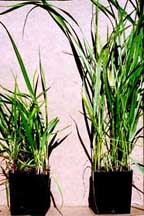
We offered two kinds
of live plants 1990 to 2020, the Regular (left)
and the Supershamanistic™
(right), shown in June growing in
2-3/4" pots.
The Supershamanistic™ is a more robust plant, growing three
to five times faster. We can get 3-5 two-foot long cuts a year
from our Supershamanistic™ plants, but only one or two cuts
from the Regular strain.
Our Supershamanistic™
strain grows so fast--when you cut it in the morning, you can
see it regrowing by noon! - A natural polyploid strain created
by nature.
No pesticides, sprays, or chemical fertilizers are used.
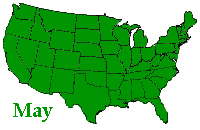
Maps show suggested
planting dates for your state in green:
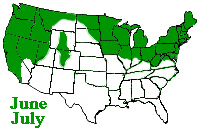
Get plants of the "Supershamanistic™" strain from Brenda Sharp.
CLICK HERE for the suggested earliest ship dates for
each State.

The dramatic increased speed of growth of our "Superhamanistic™ strain, is a natural genetic chromosome increase that is nautrally produced in grasses called "polyploidy" which is not caused by fertilizers. Grasses are the original "genetic engineers" in that they can increase their chromosomer numbers themselves.
This plant is not a hybrid or a GMO and is NOT man-made. This strain is the fastest-growing natural sweetgrass in North America, discovered growing in our beds many years ago, and was also found in 1960 growing in the wild stands of Ohio.
No difference in the scent of either strain.The record length produced so far with this strain, is 41.5 inches long, but this strain could have a potential of 48-60 inches long.
When
established and fertilized monthly, the Supershamanistic™
strain can produce at least 40,000 braids per acre per year. On
a per-acre scale, one of the most valuable agricultural product
you can grow.
WHEN
PLANTS ARRIVE when you order them from Brenda Sharp's nursery
in Arkansas -- If you
don't have time to plant them immediately, they can survive in
their plastic bags for a few days, as long as the roots are kept
moist and they get some light, but never any direct sunlight.
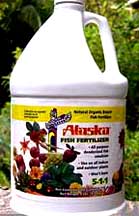
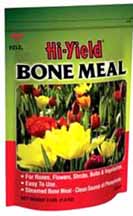
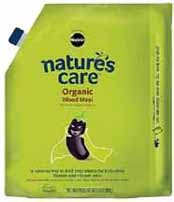
FEED
with the THREE
MAIN FERTILIZERS ONCE A MONTH.
The three main fertilizers are Miracle
Gro brand of blood meal, the
Hi-yield brand
of bone meal, and the Alaska brand of liquid
fish. If not in your local
store, check on line with SEARS, EBAY, or WALMART
When
plants first arrive,
always soak
the roots in a bowl of water for at least one minute. You can also
mix up one cup liquid fish fertilizer with a gallon of water,
and soak roots for 15 minutes in the liquid fish solution before
planting.
When we ship the plants to you,
their roots are not shipped bare-naked, and have moist potting
soil protecting them, which allows plants to start growing quickly
once you plant them.
Before planting
in pots, add a Tablespoon each of bone
meal and blood meal and mix them into the potting soil, before
planting.
AFTER PLANTING, fertilize the plants with liquid fish fertilizer, one cup diluted in a gallon watering can. Then sprinkle the surface with more water, to wash the fertilizers deeper into the soil, so it is not on the surface.
IN AREAS OF WILD ANIMALS THAT LIKE FISH FERTILIZER, try a tea of chicken manure, soak two cups in a gallon of water for a day, and skim off any floating material before you water the plants with the tea. Otters and skunks are the main problem, and possums and raccoons are usually not attracted.
You will repeat those three fertilizers each month in the growing season-- Two Tablespoons of bone meal and blood meal sprinkled around each plant, and one cup of liquid fish diluted in a gallon of water. And then water everything in until you do not see any fertilizers on the surface.
If you are ordering 20 or
fewer plants for delivery in spring or summer, it is
best to plant each plug into 8" diameter plastic pots
in potting soil, keeping them outside in the shade for
a couple of days, and then introduce them to morning sun and then
as much afternoon sun as they can take.
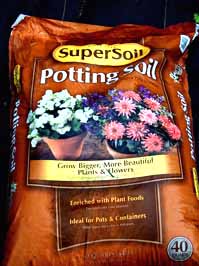 One of the Best POTTING
SOILS
One of the Best POTTING
SOILS
WE have used SUPERSOIL™ brand potting mix for the last 25 years with very good results.
If your local garden store does not have it, you may be able to
special-order it from an ACE hardware in one cubic foot and 2
cubic feet bags, or on line.
The other commercial POTTING SOILS for sweetgrass, that have been tested--
--Pure Coconut Coir
--Fox Farm Ocean-Forest
--Miracle Gro Cactus, Palm and Citrus potting mix
--Miracle Gro Nature's Care, and
--Redi-gro potting mix.
NOT Recommended
POTTING SOILS for growing
sweetgrass:
--Kellogg Brand potting soils
--Miracle Gro Indoor potting mix
--Miracle Gro Moisture Control
--Miracle Gro Orchid mix
--Miracle Gro Performance Organics
--Miracle Gro Seed Starting potting mix
--Redi-Gro Organic potting soil
Plus, DO
NOT USE
potting soil that contains polymer crystals,
and do not add any polymer crystals to the potting soil, as it
keep the soil too moist. The potting soils with polymer crystals
will mention something on the bag about "moisture control" or "Watersorb"
Thanks to Jenny in Virginia for helping us test various kinds of potting soils, to find the best kinds.
CONTAINER
GROWING--
Also for plants in containers,
never use
soil dug out of the garden.
Containers should only be plastic pots or wood planter boxes. DO NOT use unglazed clay pots or "Cow-pots" which are pots made out of cow manure. You can also use clay pots that are glazed.
FERTILIZERS--
Also, NEVER use Miracle Gro® brand bone meal or Whitney Farms bone meal, but any other brand of bone meal is OK. You can find the other brands at ACE hardware or garden stores on the shelf like "Hi-Yield" brand or "Jobes Organic" or they can special order those for you.
PURE BONE MEAL -- "If it is WHITE, it is pure
and all right."-- If it is GOLD or TAN, DO NOT USE,
and look on the label for "Porcine source". This
gold or tan "porcine" bone meal can kill your plants.
The first of the three numbers on the bag should be "0".
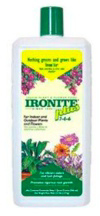
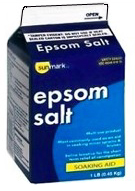
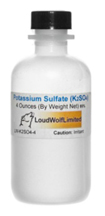
THREE MINOR FERTILIZERS to add ONCE A YEAR,
1.) Add some LIQUID IRONITE or some other kind of LIQUID IRON supplement, or Liquid Ironite Plus, that is usually used for lawns, which adds iron plus important trace minerals like Manganese, mix one fluid ounce (3 Tablespoons) in a gallon of water. We use the Garden-Rich brand "Liquid Iron + micronutrients" manufactured by the Bonide products in New York. Usually available in garden stores, but can be found on Ebay.
2.) Add some EPSON SALTS once a year, one ounce (3 Tablespoons) in a gallon of water, available at any pharmacy.
3.) The third fertilizer to add once a year is one ounce (3 Tablespoons) of POTASSIUM SULFATE in a gallon of water. Do not confuse Potassium sulfate with Potash or Muriate of Potash (Potassium chloride)---Potassium sulfate is a white powder, and potash is brick-red and can kill your plants. Check on Ebay for sellers, not usually available from garden stores.
Planting sweetgrass in the
pots first, allow you
to easily move them around the garden, until you find the perfect
sun/shade conditions that the plants like best.
HANGING
"GARDEN of SWEETGRASS"--The new 8th Wonder of the World?

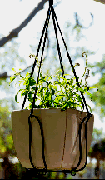
Even in cold-winter areas of
the country, you could grow your sweetgrass in hanging containers.
Then for winter, dig a
hole in the garden, and put the plant plus the container in the
ground to protect the roots. There are some nice macrame plant
hangers on Ebay for less than $10, and some metal ones too. Growing
in a hanging basket, you could beat the record length of 41.5
inches! Start the New Hanging Sweetgrass Garden Wonder of the
World.
GROWING SWEETGRASS HYDROPONICALLY?--May be possible, and
let me know if anyone has tried this method successfully. Adequate
light and keeping from freezing in winter would be the two issues
to resolve, plus adequate fertilization, including the micronutrients.
NEVER GROW SWEETGRASS INDOORS. When you place your order, the ship date for your night time temperatures should be in the 50s and not in the 40s. If grown in a container for the summer, for places that get in the 20s or below in winter, the plants should be planted in the ground before the first frost.
NEVER ORDER SWEETGRASS TOO EARLY in spring! Your night need to be close to 50 degrees or more, and never order plants and try to grow them indoors if your nights are still in the 30s and 40s at night.
HARDY TO THE ARCTIC CIRCLE. Sweetgrass is hardy up to the Arctic Circle, so unless you have polar bears and glaciers in the neighborhood, plants will survive just fine planted in your garden overwinter. Just mark the spots so you know where they are going to sprout up in spring. If you have plants in containers, you can put the container with the plant in the ground.
NEVER COVER THE PLANTS IN WINTER WITH MULCH--NO LEAF MULCH, no straw mulch, no mulch ever at all. Plants in the ground can take any winter your climate can throw at them. MULCHING in summer, you can use pine bark or coconut hulls, but never leaves or straw.
Let them grow for at least month in the pots before you plant them out into the garden. In the North, they will want sun all day long. In the Southwest, Deep South and Southern California, they will absolutely need some afternoon shade.
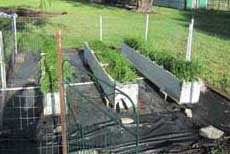
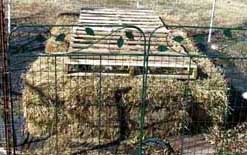
KEEPING PLANTS IN PLANTER BOXES THROUGH THE WINTER--Tips from
David Keffer in OKLAHOMA.. In the extreme winters of Oklahoma,
the plants that were growing in the three planter, were brought
together side by side and surrounded with straw bales as seen
in the second photo.
Do not covering the plants directly with some kind of mulch and possibly smothering or choking the plants, instead two wooden pallets were placed over the plants across the straw bales. This configuration provided two conditions that helped the plants survive winter, which included sustained events of subfreezing weather down to as low as 17 degrees.
Straw bales protected the plants from the harsh temperatures and at the same time generated their own heat from their decomposition in the process. The pallets "hovering" over the tops of the plants created a micro environment like a terrarium, helped from the heat from the straw bales. The pallet's lattice protected from winds, snow and cold temperatures.
STARTING A NEW SWEETGRASS AREA, where weeds or turf grasses exist. Do
not bother tilling, because there will be dormant weed or grass
seeds in the soil. Best to get 4 mil to 6 mil black plastic sheeting,
plus bags of chicken manure (Lowes sells 20 pound bags for $7.98).
Mow any weeds or grass down to ground level, and water. Then,
add one inch of chicken manure and roll out the black plastic
on top, and weigh down the edges. Keep the plastic on for 3-4
weeks, then remove for 3-4 weeds to allow any dormant weed or
grass seeds to sprout.
Then, mow, wet, apply more chicken manure and cover again for
3-4 weeks. Then, remove the plastic again, and if more weed seeds
sprout, repeat until no more weed or grass seeds sprout
ALWAYS CUT
when harvesting, NEVER PULL OUT BY THE ROOTS.
If you use a knife or scissors to cut your sweetgrass, the plants will recover within three hours.
If you pull them out by their roots, it takes three months for
the plants to regrow the root-leaf shoots. You can see the base
of a lot of Canadian-harvested braids, dried roots that show that
these were harvested by pulling instead of cutting, which is very
damaging to the plants.
FREEZE DRY METHOD. There are many methods to dry your sweetgrass and how your dry your sweetgrass has a direct relationship to the strength and quality of the scent you end up with. Think turning grape juice into wine.
So there are at least three potential outcomes for the scent of your leaves, nice strong fragrant sweetgrass, dried sweetgrass with little or no scent, and sweetgrass that started heating up like compost during the drying process to produce a wet-dog smell.
My favorite method is the freeze-dry,
where you cut the leaves
the evening before and wrap it in paper towel or a cloth towel,
and freeze it overnight. Then when the morning is warm, spread
it out in a thin layer in the sun on newspaper, and turn it every
15 minutes for the first two hours then every hour until sunset,
or until dried.
If grass still needs further drying at the end of the first day,
rewrap and put back in the freezer, and finish drying on the
next warm, dry morning, and turn once an hour until fully dried.
The leaf surface goes from shiny to dull when dried.
At room temp. the scent will
stay strong for 6 months, but
if you want to keep it strong longer, store in a freezer Hefty
zip lock plastic bag in the freezer or refrigerator, and that
can keep the scent strong for up to two years.
STORING DRIED SWEETGRASS or BRAIDS--Best refrigerated or frozen wrapped in paper or paper towels first then put in a ziplock storage bag. Will keep its fragrance for the longest time frozen.
If kept at room temperature NEVER store in plastic, because any moisture still in the leaves can cause mold to grow and ruin the dried grass. Wrap in paper and store in an airy place indoors, not an enclosed space, or outdoors in a shed.

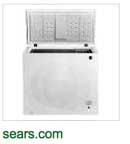
This is the best freezer to store dried sweetgrass, made
by Sears, with manual defrost and very quiet. Has a drain plug
for defrosting. The current China tariff issues, or the Corona
Virus, may cause the smaller sizes to disappear and may increase
the price of all of the models.
Kmart carries some of these and had a few on sale in May 2019, and you may be able to order them directly from Sears on line. Sam in North Carolina (see HERE) uses the 14.8 cubic foot model to store the production from his beds, and sometimes fills up the whole freezer. These chest freezers are essential if you are going to go into sweetgrass production on any kind of scale.
Kenmore chest freezers are
available in many sizes--
3.5 cu feet = #12402
5.0 cu feet = #17502
7.0 cu feet = #17602
8.8 cu feet = #12902
12.8 cu feet =#17112
14.8 cu feet = #17512
19.8 cu feet = #17812
22.0 cu feet = #12822
24.8 cu feet = #17822
At the "warmest" setting, keeps -8 deg. F., medium setting -15 deg. F., and at maximum cold is an amazing -30 deg. F.
SWEETGRASS SEEDS? Viable sweetgrass seeds are rarely produced by the plants, but if you do find viable seeds in the future, or try to sprout what looks like seeds that you plants produce in spring, it takes three years to get a plant the same size as the plug you are ordering, because the seedlings need to grow a root system before they start sending up many leaf shoots.
In May, the plants may flower
and produce what looks like seeds,
and if you want to cut them off when they appear, that will save
the plant energy to make more leaves for you.
ABOUT MOSQUITOES--Live sweetgrass plants themselves do nothing to manage or repel mosquitoes - Scientists have studied the pure chemicals extracted from the sweetgrass that are active. Unfortunately, live sweetgrass plants themselves growing in a yard, do not produce any mosquito-repelling ability.
The study of the extract was "Isolated and Identification of Mosquito (Aedes aegypti) Biting-Deterrent Compounds from the Native American Ethnobotanical Remedy Plant Hierochloe odorata (Sweetgrass) by Charles Cantrell and A.M. Jones in the Journal Agriculture Food Chemistry 2016 Nov, 9:64 (44):8352-8358.
Instead, for your yards, attract the mosquito-eating BIRDS--A reliable non-chemical solution to mosquitoes, is placing 6 foot tall, one inch by one inch wood bean-poles spaced about 15 feet apart in an open area of the yard, so that the mosquito-eating birds will have perches to hunt from. Our yard has been mosquito-free every summer, since we set up those bird perches many years ago.
By making a tea out of dried sweetgrass, using water or vodka, you may be able to produce a natural mosquito repellent that you could apply to your skin--but just planting the plants around your yard, will not do anything.
Another alternative to DEET is a discovery by the New Mexico State
University, that the Victoria Secret perfume "Bombshell"
kept mosquitoes away for about two hours.
Click here to see sweetgrass growing month-by-month,
and the plant in a few
months will fill the 8" pot. When they've grown to a large
size, you can plant them out into your garden, spacing each 1-2
feet apart. Sweetgrass is very fast-growing in the summer.
Plants ordered in autumn can be directly planted into the garden---just make sure to put them in an area that is completely free of other grasses, and carefully mark each spot where you plant your plants, so you can find them next spring.
The record length obtain from our Supershamanistic™ strain is 41.5 inches (1.05 meters) grown in Montana. If your plants beat that record, please let us know. This strain should have the potential to reach 48-60 inches.
Plants are shipped via the
post office in cardboard
boxes, priority mail.
SWEETGRASS WILD HARVESTERS, PLEASE NOTE. When sweetgrass is harvested from wild stand, usually all that is brought to the plant is a tobacco offering, and the plants are pulled out by the roots.
In the future, to cause no permanent damage to the plants, scatter a hand-full of blood meal and a hand-full of bone meal for every hand-full of grass that you harvest. And never, ever pull sweetgrass up by the roots ever--always cut with scissors or a knife.
You would not cut your own hair by pulling it out by the roots? And dried sweetgrass leaves contain more iron in them than our own blood does, so if you are going to take blood away from the plant, you have to put some back, so you do not end up draining their life-forces from them.
EBAY SWEETGRASS BRAID Prices - August 2020 - 50 offers listed on-line.
Offered in 7 different
lengths. Prices include shipping. One pound when made into
braids equals $200-280 in braid values.
--4-5 inches - $4 - 13
--16-17 inches - $6-7
--18-24 inches - $8-10
--20 inches - $12
--24-27 inches - $11-20
--34-36 inches - $20
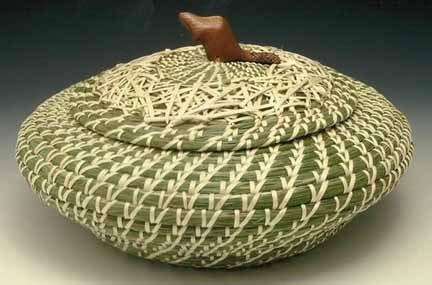
SWEETGRASS BASKET MAKERS, PLEASE NOTE. We are always learning something new about sweetgrass, and Dawn Walden a basket maker in Michigan told us about a difference between our two strains of sweetgrass that is important when making baskets.
The Regular strain has slightly narrower leaves when dried, so is best for very fine basket-work, whereas the Supershamanistic™ strain has wider leaves when dried for larger work.
Example of a Dawn Walden basket
below:
Also read Robin Wall Kimmerer's
book -- "Braiding Sweetgrass" that tells the story of sweetgrass from
a member of the Potawatomi Nation. In the Preface she writes,
"In our language it is called wiingaashk, the sweet-smelling
hair of Mother Earth. Breathe it in and you start to remember
things you didn't know you'd forgotten."
Pictures
of our plants growing in home gardens, click here=
FOR STATES A-M =
sweetstates.html
and STATES N-W = sweetstates2.html
Craig's "Sweetgrass Encyclopedia" with
50 pages of SWEETGRASS
GROWING
INFORMATION can be viewed here.
This
web site contains the most detailed information ever compiled
about sweetgrass, over 11,000 words, and printed out is 50 pages.
Redwood City Seed Company, Box
361, Redwood City, CA 94064.
Updated/SC March 12, 2025 - Prices
may change seasonally without notice.
LIQUIDATED DAMAGES NOTICE: Any text or images lifted and posted
on another web site, or used in a publicly distributed document,
either printed, PDF or other electronic means, without a written
license, you agree to pay $100 per day in liquidated damages per
image or per sentence, on demand.